
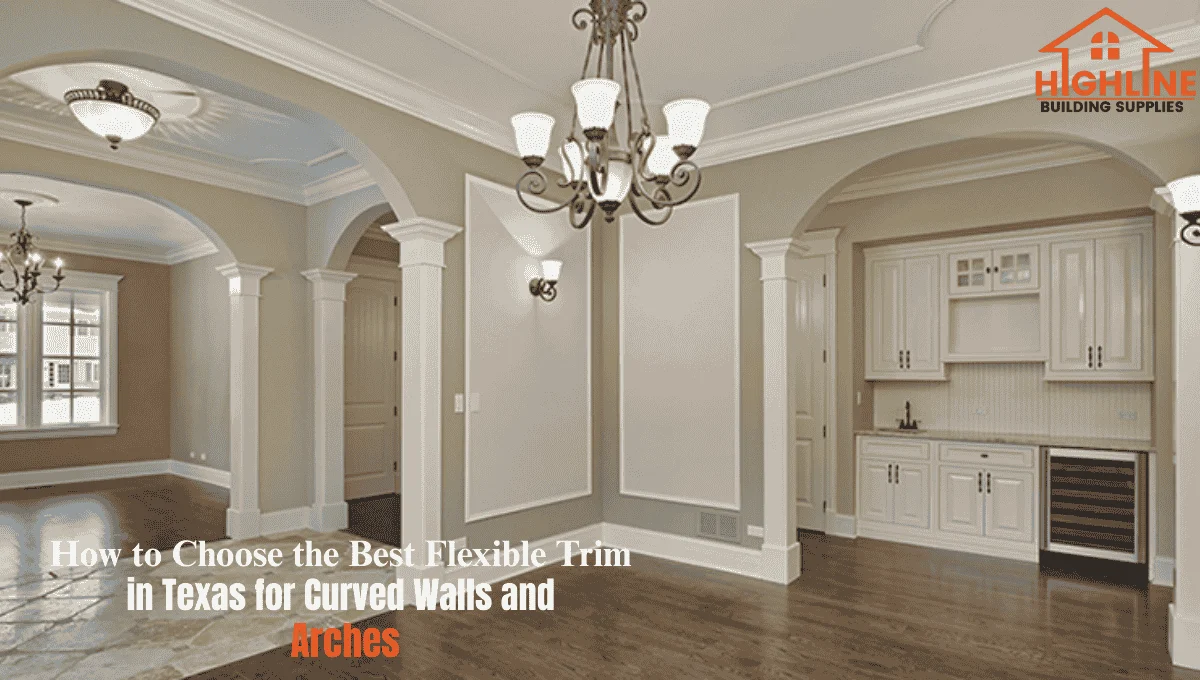
Finding the best flexible trim in Texas can make a huge difference when finishing curved walls, arched doorways, or rounded windows in modern homes. Traditional wood trim often cracks or is difficult to bend, leaving homeowners and contractors struggling to achieve a clean, professional look.
Flexible trim solves this problem by allowing molding to bend smoothly around curves while maintaining the same design profile as standard trim. In Texas—where architectural styles frequently include arches and curved entryways—choosing the right flexible trim ensures both durability and visual consistency. But not all flexible trims perform the same. Factors like material quality, climate resistance, and profile compatibility can determine whether your project looks professionally finished or poorly executed.
In this guide, we’ll break down how to choose the best flexible trim in Texas, which trim profiles work best for curved walls and arches, and what professional installers recommend for long-lasting results.
Why Flexible Trim Is Ideal for Curved Architecture
Flexible trim is designed to replicate traditional molding profiles while offering enough elasticity to wrap around curved surfaces.
Instead of cutting dozens of small wood pieces to fake a curve, flexible trim allows installers to use one continuous piece, creating a seamless and professional finish.
Key Advantages
- Bends easily around arches and curved walls
- Reduces installation time and material waste
- Resists cracking compared to rigid wood trim
- Maintains consistent molding profiles
- Handles temperature changes better than standard lumber
In Texas homes—where architectural styles often include arched entryways and rounded windows—flexible trim provides both aesthetic precision and long-term durability.
Understand the Types of Flexible Trim Profiles
Choosing the right profile is just as important as choosing the material. Many installers match flexible trim to existing molding styles so the curved sections blend perfectly with straight runs.
Colonial Profile Trim
Colonial profiles remain one of the most popular options because they match traditional American home design.
Common examples used by contractors include:
- 2 1/4″ X 14′ Colonial FJ PRMD CCFJP CC214FJP
- 3 1/4″ X 16′ Colonial Base PMDF ULCB
- 3 1/4″ X 16′ Colonial FJ PRMD CBB314FJP CBFJP
These profiles work well for:
- Curved baseboards
- Archway casings
- Rounded wall transitions
- Decorative trim accents
The goal is always consistency—your curved trim should visually match your straight molding.
Material Matters: What Works Best in the Texas Climate
Texas weather can be tough on building materials. Heat waves, humidity, and seasonal shifts can cause lower-quality trims to warp or separate.
When selecting the best flexible trim in Texas, professionals usually focus on three material factors.
1. Flexibility Without Memory Loss
Quality flexible trim bends easily but holds its shape after installation. Cheap materials often try to spring back.
2. Moisture Resistance
Humidity is common in many parts of Texas. Moisture-resistant trim prevents swelling or deterioration over time.
3. Paint Compatibility
Flexible trim should accept standard primers and paints so it blends with the rest of your interior or exterior finish.
Pro installers often recommend primed flexible trim because it saves finishing time and improves paint adhesion.
How to Choose the Right Flexible Trim for Your Project
Selecting the correct trim comes down to more than just the molding style.
Here are the factors experienced builders look at before purchasing.
Measure the Radius of Your Curve
The tighter the curve, the more flexible the trim must be.
Gentle curves (like wide archways) can handle stiffer materials, while tight arches require highly flexible trim.
Match Existing Trim Profiles
Your curved trim should mirror the surrounding molding profile.
For example:
- Colonial baseboards should match existing colonial base profiles
- Door casings should match the nearby door trim
- Window arches should mirror straight window moldings
Consistency is what creates a professional finish instead of a patchwork appearance.
Choose the Correct Length
Longer trim pieces reduce seams. Products like 16-foot lengths are commonly used by professionals for smoother results.
Professional Installation Tips for Curved Trim
Even the best trim won’t look great without proper installation.
Here are a few practical tips used by experienced installers.
Pre-Test the Fit
Before applying adhesive or nails, dry-fit the trim around the curve to confirm flexibility and alignment.
Use Construction Adhesive
Adhesive provides stronger support along curves where nails alone may not hold evenly.
Secure with Pin Nails
Pin nails help hold the trim in place while the adhesive cures.
Work Slowly Along the Curve
Install from one side and gradually bend the trim along the arch to avoid kinks or uneven pressure.
Patience during installation is what produces smooth, continuous curves.
Why Builders Prefer Flexible Trim Today
Many contractors used to rely on complicated methods to finish curved walls—like kerf-cutting wood or assembling multiple small trim pieces.
Flexible trim changed that.
Professional installers now prefer it because it:
- Saves labor hours
- Reduces installation errors
- Produces cleaner curves
- Minimizes material waste
In large Texas homes where curved architecture is common, flexible trim can cut installation time dramatically while improving visual quality.
Common Mistakes Homeowners Make
Choosing flexible trim seems simple, but a few mistakes can cause unnecessary problems.
Buying the Wrong Profile
If the profile doesn’t match your existing trim, the difference will be obvious.
Ignoring Climate Conditions
Some trims perform poorly in heat or humidity, which can lead to warping.
Using Standard Wood for Curves
Trying to force rigid wood trim around arches usually results in cracks.
Skipping Adhesive
Nails alone often don’t provide enough support for curved installations.
Avoiding these mistakes ensures your trim installation looks intentional and professionally finished.
Customer Reviews
Michael R., Dallas, TX
We had three arched doorways in our remodel. Flexible trim made the installation smooth, and the final result looks like it was custom-built.
Sarah L., Houston, TX
I originally tried bending wood trim myself—it cracked. Switching to flexible trim solved the issue instantly.
Daniel P., Austin, TX
Matching our colonial baseboard style around curved walls was easier than expected. The trim blended perfectly.
Frequently Asked Questions
1. What is the best flexible trim in Texas for curved walls?
The best option depends on the trim profile and material quality. Many professionals prefer flexible colonial trim styles because they match common residential molding designs.
2. Can flexible trim be painted?
Yes. Most flexible trims come pre-primed and can be painted using standard interior or exterior paint.
3. Does flexible trim work for tight arches?
Yes. High-quality flexible trim can bend around tight curves without cracking.
4. Is flexible trim more expensive than wood trim?
The material may cost slightly more, but it often saves money in labor and installation time.
5. Can homeowners install flexible trim themselves?
DIY installation is possible, especially for simple curves. However, complex arches may benefit from professional installation.
Final Thoughts
Curved architectural details deserve a finish that looks intentional and seamless. Choosing the best flexible trim in Texas ensures your arches, rounded walls, and curved transitions maintain the elegance they were designed for.
The right profile, proper installation, and durable materials can transform a difficult project into a smooth and professional result. If you’re looking for reliable, flexible trim products and professional-grade building materials, Highline Building Supplies offers solutions designed specifically for modern residential projects.
Whether you’re renovating a single room or building a new home, choosing the right trim supplier makes all the difference.
See our exclusive collection of fiberglass door, visit this page: Modern Fiberglass Entry Doors That Improve Home Insulation
Author Bio
Highline Building Supplies is a trusted provider of quality building and remodeling materials for homeowners and contractors across the United States. With strong industry experience in trim, doors, and interior finishing products, the team shares practical insights to help customers choose the right materials for modern home projects.





Leave a comment