
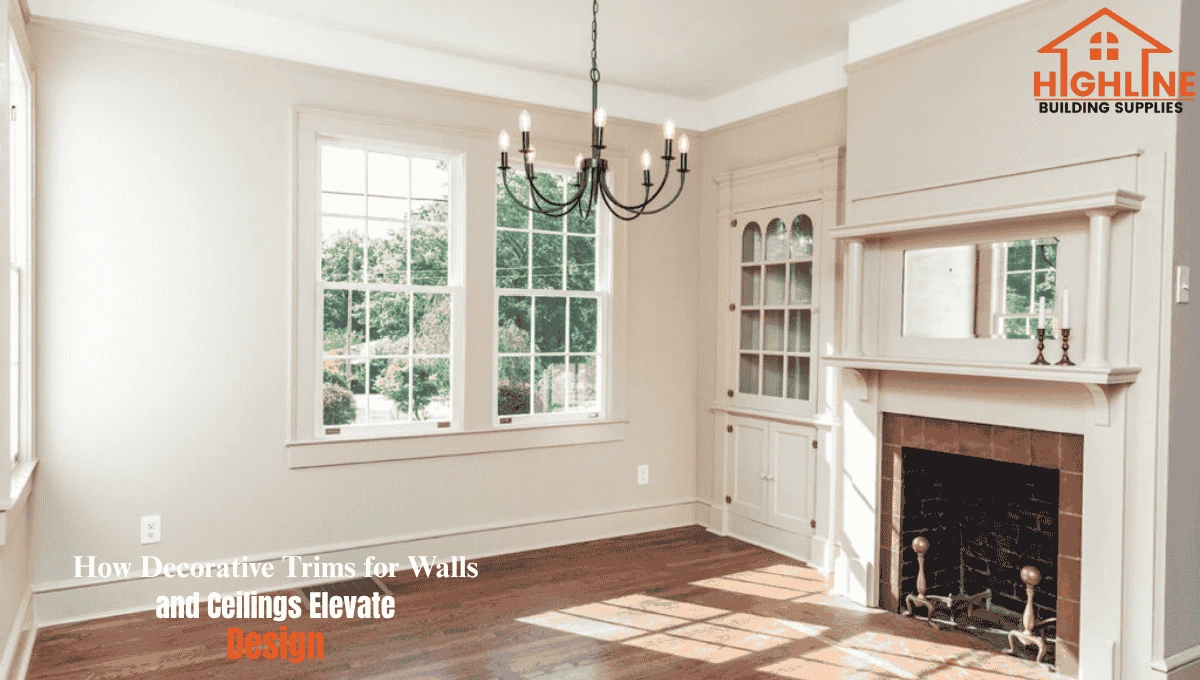
When people think about changing a room, they usually focus on paint, flooring, or furniture first. But decorative trims for walls and ceilings often do more to sharpen a space than any single color or accessory. The right trim can make ceilings look taller, walls feel more finished, and plain rooms read as custom instead of builder-basic. It is one of those details that people may not always notice immediately, but they absolutely feel.
In real homes, trim does more than decorate. It creates transitions, hides uneven edges, frames architectural features, and helps tie a room together. That is why designers, remodelers, and finish carpenters often treat trim as part of the architecture, not an afterthought. At Highline Supplies, this kind of practical building-material knowledge shows up across their categories and educational content, where the focus is on helping homeowners choose materials that actually work in real-world installs, not just in staged photos. For readers comparing options, it can also help to buy trim online and review profiles and sizes before planning a room.
What decorative trim actually means
Decorative trim is a broad term for the finishing pieces installed where surfaces meet or where visual definition is needed.
Common examples include:
- Crown molding where walls meet the ceiling
- Baseboards where walls meet the floor
- Casing around doors and windows
- Chair rail and picture frame molding on wall surfaces
- Ceiling accents such as medallions and perimeter trim
These details can be simple and clean or more traditional and layered. The best choice depends on the home’s architecture, ceiling height, room size, and how formal or modern you want the space to feel.
Why trim has such a big design impact
Trim works because it creates visual structure.
A blank room often feels unfinished because the eye has nowhere to land. Once trim is added, the room gets edges, lines, and proportion. That makes even simple spaces feel intentional.
What trim changes in a room
- It adds depth and shadow lines
- It makes transitions look cleaner
- It helps define the room’s style
- It can visually widen or heighten a space
- It gives walls and ceilings a more custom look
A lot of homeowners underestimate this. They spend heavily on furniture and decor, then leave the shell of the room plain. In practice, even modest trim upgrades can make average finishes look more polished.
The main types of decorative trims for walls and ceilings
Not every trim belongs in every room. The trick is knowing what each type does best.
Crown molding
Crown molding sits at the top of the wall where it meets the ceiling. It is one of the most effective ways to make a room feel refined.
It works especially well in:
- Living rooms
- Dining rooms
- Entryways
- Primary bedrooms
- Rooms with at least moderate ceiling height
For a classic finish, profiles with more detail create a formal look. For a cleaner style, simpler profiles feel more modern. A product like CROWN 4-1/4 X 9/16 FJ 16’PRIMED 16′ 8012FJP fits well when you want a traditional crown line that still feels versatile enough for many interiors.
Baseboard trim
Baseboards anchor the room visually and protect the lower wall from scuffs, vacuum bumps, and everyday wear. Good baseboard trim is practical first, but design-wise it also affects how finished the room feels.
A common mistake is choosing a baseboard that is too short or too thin for the room. In spaces with taller ceilings, undersized baseboard can look skimpy. In tighter rooms, an oversized ornate profile can feel heavy.
For curved walls or layouts where flexibility matters, options such as 1X4×10 STRAIGHT FLEXIBLE TRIM BASEBOARD or 1X6x10 STRAIGHT FLEXIBLE TRIM BASEBOARD can solve fit problems that rigid material often creates.
Wall molding and panel trim
This category covers a lot of strong wall trim ideas, including:
- Picture frame molding
- Applied box molding
- Chair rail
- Wainscoting details
- Panel mold layouts
These trims can turn a flat wall into a feature wall without requiring a full renovation. They are especially useful in dining rooms, hallways, stairwells, and home offices where you want more architectural interest.
Decorative ceiling molding
Decorative ceiling molding is not just crown. It can also refer to trim used to frame a tray ceiling, define ceiling sections, or create perimeter detail that draws the eye upward.
This works well when:
- The room needs more vertical emphasis
- The ceiling feels flat or visually empty
- You want a custom look without changing the entire structure
Ceiling trim often works best when the pattern of the room below supports it. A highly detailed ceiling above plain, low-quality finishes elsewhere can feel disconnected.
Ceiling medallion trim
Ceiling medallion trim is typically centered around a chandelier, pendant, or other ceiling fixture. It adds a focal point and can make a standard light fixture feel more intentional.
This detail works best when:
- The room already has a centered fixture
- Ceiling height can support the added emphasis
- The medallion scale matches the light fixture
One of the biggest mistakes here is going too large. Oversized medallions can overwhelm a room fast, especially in average-height homes.
How trim supports different design styles
Trim should match the architecture of the home, not fight it.
Modern interiors
Modern spaces usually work best with:
- Clean, simple profiles
- Minimal ornament
- Crisp transitions
- Consistent lines from room to room
In these spaces, trim still matters, but restraint matters more. A slimmer crown or flat stock application can feel much more current than a highly decorative profile.
Traditional interiors
Traditional homes can handle:
- Layered crown profiles
- Taller baseboards
- Framed wall molding
- Decorative corner blocks or built-up trim assemblies
These homes often benefit from richer interior trim designs because the architecture already supports them.
Transitional interiors
Transitional style lives in the middle. It usually pairs classic trim placement with cleaner profiles.
This is often the safest route for homeowners because it gives character without locking the room into a very formal or very modern look.
Practical benefits beyond appearance
Trim is often discussed as a style choice, but in the field it also solves practical problems.
It hides imperfect transitions
Walls and ceilings are rarely perfect. Slight gaps, uneven drywall edges, and movement over time are common. Trim helps cover those transitions in a way that looks intentional.
It protects high-contact areas
Baseboards, chair rails, and some wall trim layouts reduce visible wear in everyday family spaces.
It helps rooms feel complete
Rooms without trim can feel unfinished even when everything else is installed properly. This is especially true in remodels where one updated area makes plain adjacent surfaces stand out more.
What homeowners usually get wrong
This is where hands-on experience matters. Trim looks simple on paper, but poor planning shows quickly.
- Choosing trim only from a close-up sample
A profile may look great in your hand and wrong in the room. Always think about scale, ceiling height, and viewing distance.
- Mixing too many styles
One ornate profile, one modern casing, and one plain baseboard usually do not create “character.” They create confusion. There should be a clear visual language throughout the home.
- Ignoring room proportions
Big trim can make a low room feel crowded. Tiny trim can disappear in a larger room.
- Treating installation as a minor detail
Even good material looks bad when joints are sloppy, corners are uneven, or reveals are inconsistent. Trim is detail work. Precision matters.
- Forgetting about curved surfaces
Standard rigid trim does not always work around arches, radius walls, or unusual transitions. This is exactly where flexible trim products become useful rather than optional.
How to choose the right trim for your space
A practical selection process usually works better than choosing by trend.
Start with these questions
- What is the room’s style: modern, traditional, or transitional?
- How tall are the ceilings?
- Is the room large enough to handle deeper profiles?
- Are there curved walls or unusual corners?
- Are you highlighting a feature or just finishing the space cleanly?
General sizing guidance
- Lower ceilings usually look better with simpler, smaller trim
- Standard-height rooms often benefit from moderate crown and baseboard sizes
- Taller ceilings can support larger, more detailed profiles
There is no perfect one-size-fits-all formula, but proportion matters more than trend.
Best rooms for decorative trims
Some spaces benefit from trim faster than others.
Living rooms
Trim adds polish and helps the room feel architecturally grounded. Crown, baseboard, and wall molding are all strong options here.
Dining rooms
This is one of the best rooms for panel molding, chair rail, and medallion details because people expect a little more formality.
Bedrooms
Bedrooms do not need heavy trim, but even a simple crown or upgraded baseboard can make them feel calmer and more finished.
Hallways and entryways
These spaces often lack furniture and soft finishes, so trim does a lot of visual work.
Ceilings around statement lighting
A centered medallion or perimeter trim can turn an ordinary fixture into a much stronger focal point.
Common limitations to keep in mind
Trim is powerful, but it is not magic.
- It will not fix poor room proportions
- It can highlight crooked walls if installed badly
- Overdecorating can make a room feel smaller
- Some ornate profiles need more maintenance and more precise painting
- Budget can rise quickly if multiple rooms need custom work
That said, thoughtful trim usually offers a better visual return than many more expensive cosmetic upgrades.
Expert tips that actually work
Keep profiles consistent across connected spaces
Open floor plans especially benefit from consistency. You can vary accent details, but core trim language should stay related.
Use trim to support focal points
Do not add molding everywhere just because you can. It works best when it frames something important, such as a fireplace wall, dining room chandelier, or tray ceiling.
Paint decisions matter
Trim can either blend into the wall color for subtle depth or contrast for sharper architectural definition. Neither is wrong, but the effect is very different.
Test layout lines before installation
For wall molding, tape off the layout first. Many homeowners are surprised by how different spacing looks once it is on the wall.
Think about the whole envelope of the room
Great trim design connects walls, ceiling, flooring, doors, and windows. That is also why broader material planning matters. For example, homeowners improving interior finishes often end up reviewing adjacent upgrades too, including openings and exterior performance. A related guide on energy efficient exterior doors for houses is useful when you are thinking about how finish details and building-envelope upgrades work together in a full home refresh.
Real-world examples of where trim makes the biggest difference
Example 1: Builder-grade living room
A basic living room with plain drywall and minimal baseboard often feels flat, even with decent furniture. Adding moderate crown, taller baseboard, and a simple wall molding layout can shift it from generic to custom-looking without changing the floor plan.
Example 2: Curved wall in a hallway
This is where many DIY installs stall out. Standard pieces fight the curve, joints open, and the finish looks forced. Flexible trim products solve that problem cleanly and usually save time compared with trying to kerf or force rigid stock into place.
Example 3: Dining room with a chandelier
A chandelier by itself can look like it is floating. Pairing it with a scaled medallion and perimeter wall trim gives the fixture visual context and makes the room feel deliberate.
Customer perspectives
Here are a few realistic examples of what homeowners often say after getting trim choices right:
“We thought the paint color would be the big transformation, but the crown and baseboards made the room feel finished for the first time.”
“Our hallway had a curved section that always looked awkward. Using flexible baseboard was the first solution that actually fit without gaps.”
“The dining room medallion seemed like a small detail, but once it was installed, the light fixture finally looked like it belonged there.”
FAQ:
What trim makes a room look more expensive?
Crown molding, taller baseboards, and well-spaced wall molding usually make the biggest impact. The key is proportion and clean installation, not just ornate detail.
Is crown molding still in style?
Yes. It is still widely used, but the profile matters. Simpler shapes suit modern homes, while layered profiles suit traditional rooms.
What is the best trim for low ceilings?
Low ceilings usually look better with simpler and smaller profiles. Oversized trim can make the room feel compressed.
Can decorative trim work in modern homes?
Absolutely. Modern homes often use flatter, cleaner profiles and more restrained applications, but trim still adds structure and depth.
Where should I use a ceiling medallion?
Use it around a centered light fixture where you want a focal point, especially in dining rooms, entryways, and some bedrooms.
Is flexible trim worth it?
Yes, when the wall or transition is curved. It helps create a cleaner fit where rigid trim would gap, crack, or require extra labor.
Final thoughts
The best decorative trim choices do not shout. They quietly improve proportion, finish transitions, and make the room feel considered. That is why decorative trims for walls and ceilings remain one of the smartest ways to elevate interior design without changing the entire structure of a home.
The most successful projects usually come down to a few practical decisions: choosing profiles that fit the architecture, scaling them correctly, and installing them with care. Whether you are exploring simple wall trim ideas, planning decorative ceiling molding, or comparing options for baseboard trim and ceiling medallion trim, the goal is the same: create a room that feels complete, balanced, and built with intention.
Author Bio
Highline Building Supplies Editorial Team
The Highline Building Supplies editorial team includes home improvement specialists, building-material professionals, and design-focused writers who work closely with real product applications and homeowner questions. Their content is built around practical selection guidance, installation awareness, and the kinds of finish details that make a visible difference in everyday projects.





Leave a comment