
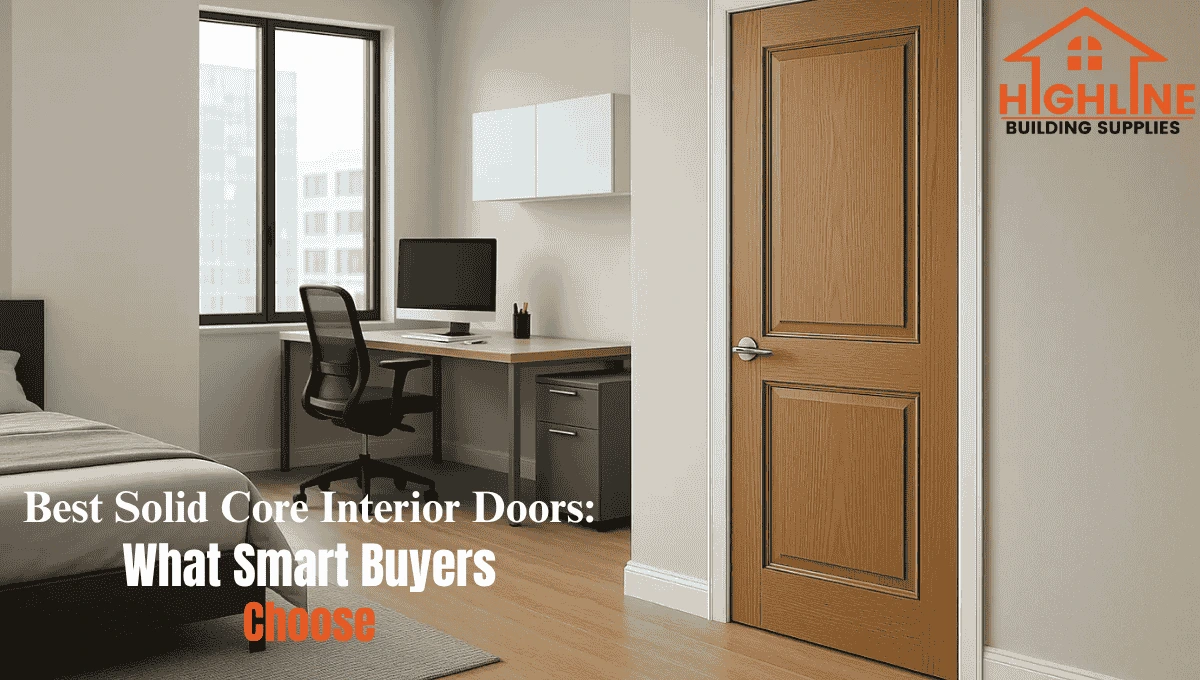
3.When homeowners start comparing interior doors, they usually focus on style first and performance second. That’s understandable—but it’s often backwards. The best solid core interior doors do much more than complete a room visually. They help control noise, improve privacy, feel more substantial in daily use, and hold up better over time than many lightweight alternatives.
For smart buyers, the right door is not just about what looks good in a showroom. It’s about how that door performs after months and years of opening, closing, cleaning, repainting, and living with it. Whether you’re renovating a single bedroom, upgrading a home office, or replacing every interior slab in the house, knowing what actually matters can save you money, frustration, and rework.
This guide breaks down what solid core interior doors are, how to choose the right one, where buyers often make mistakes, and what experienced installers and remodelers usually look for before placing an order.
What Is a Solid Core Interior Door?
A solid core interior door is an interior door built with a dense engineered core rather than a hollow cardboard-style interior. It is not the same as a fully solid wood door, but it delivers many of the benefits people actually care about in everyday residential use.
Most solid core doors are made with:
- An engineered wood or composite core
- A veneer, MDF, or finished outer skin
- A heavier, more durable structure than hollow core doors
In practical terms, that means they feel sturdier in your hand, close with a more substantial sound, and typically perform better in areas where privacy matters.
Why buyers choose them
Most people upgrade to solid core doors for one or more of these reasons:
- Better sound reduction between rooms
- Improved privacy for bedrooms and offices
- A more premium, finished feel
- Better resistance to dents and daily wear
- Stronger long-term value in renovations
If you have ever shut a flimsy interior door and immediately noticed the “empty” sound, you already understand the appeal of solid core construction.
Why Smart Buyers Prefer Solid Core Over Hollow Core
Many buyers don’t start out wanting “premium” doors. They simply get tired of lightweight doors that feel cheap, swing too easily, dent quickly, and do little to block noise.
That’s where solid core makes the difference.
- They feel better every single day
This may sound minor until you live with them.
A quality solid core door:
- Opens and closes with more stability
- Feels less rattly in the frame
- Usually sits better in the opening when installed properly
- Gives the room a more finished, intentional feel
It’s one of those upgrades that homeowners notice daily, even if guests can’t immediately explain why the house feels more refined.
- They reduce sound better
This is one of the biggest real-world reasons people switch.
No interior door will make a room fully soundproof, but solid core doors can make a noticeable difference for:
- Bedrooms
- Nurseries
- Home offices
- Bathrooms
- Media rooms
- Shared living spaces
If someone in your house works remotely, studies late, naps during the day, or simply values quiet, this upgrade is often worth it.
- They hold up better to wear
In busy homes, interior doors take a lot of abuse:
- Bags bump into them
- Kids slam them
- Pets scratch them
- Furniture clips corners during moves
A stronger core helps many doors resist everyday wear better than lightweight hollow alternatives.
Are Solid Core Doors Worth the Extra Cost?
In many homes, yes.
But the real answer depends on where you’re using them.
Usually worth it in:
- Primary bedrooms
- Home offices
- Bathrooms
- Laundry rooms
- Dens
- Guest rooms
- Hallways near living spaces
Sometimes less essential in:
- Low-use closets
- Utility storage spaces
- Secondary pantry enclosures
A smart approach is not always “solid core everywhere.” Sometimes the best strategy is using them where comfort, privacy, and daily use matter most, then saving lighter options for lower-priority openings.
That’s one reason many homeowners compare them alongside lighter alternatives before making a whole-house decision. If you’re weighing the tradeoff, this guide on when homeowners buy hollow core door online can help clarify where each option makes sense.
What Actually Makes One Door Better Than Another?
A lot of buyers assume all solid core doors are basically the same. They aren’t.
Here’s what experienced remodelers and careful homeowners usually evaluate first.
1. Core Quality and Construction
Not all “solid-feel” doors are built equally.
Some lower-grade products may technically be denser than hollow core, but still fall short in consistency, edge strength, or finish quality.
What to look for:
- Consistent, well-finished surfaces
- Clean edges
- Stable slab construction
- Good weight without feeling poorly balanced
- A finish-ready or prefinished surface that matches your project
What people often get wrong:
Many buyers focus only on style photos and ignore slab quality until delivery day. That’s too late.
Before ordering, confirm:
- Door thickness
- Door swing options
- Bore prep
- Slab vs prehung configuration
- Finish compatibility
- Trimmability, if needed
This matters especially in remodels where older openings are not perfectly square.
2. Door Style Should Match the Home, Not Just the Trend
A beautiful door can still look wrong if it clashes with the rest of the house.
Smart buyers choose a door style that works with:
- Existing trim
- Baseboards
- wall color
- flooring tone
- cabinet profile
- overall architecture
Popular styles that work well in modern and transitional homes
Shaker doors
Shaker-style doors are among the safest and most versatile choices because they look clean without feeling cold or overly trendy.
They work well in:
- Modern homes
- Farmhouse interiors
- Transitional remodels
- Minimalist spaces
- New construction
Depending on the visual depth and room style, buyers often compare profiles such as:
The difference may seem small online, but panel count changes the visual rhythm of a hallway or room transition more than many buyers expect.
Flat and flush modern profiles
These work especially well in:
- Contemporary homes
- Clean-lined renovations
- Spaces with minimalist trim details
Traditional panel styles
These are better suited for:
- Colonial homes
- Craftsman-inspired interiors
- More formal room layouts
A smart buyer doesn’t just ask, “What’s popular?” They ask, “What will still look right in five years?”
3. Sound Control: What Solid Core Doors Can and Can’t Do
This is where expectations matter.
Solid core doors are often chosen for noise reduction, but many homeowners overestimate what the slab alone can do.
1. What they can do well:
- Reduce conversation bleed between rooms
- Muffle TV and gaming noise
- Improve office privacy
- Cut down on hallway noise
2. What they cannot do alone:
- Fully soundproof a room
- Block noise if the door has large undercuts
- Fix gaps around a poorly installed frame
- Replace acoustic wall or ceiling treatment
3. What actually works better in real homes:
If sound control is your top priority, combine a solid core slab with:
- Proper weatherstripping where appropriate
- Tighter reveals
- A good threshold or sweep when applicable
- Quality latch alignment
- Correct jamb fit
A heavy door installed badly will still underperform.
That’s one of the most common mistakes homeowners make.
4. Where Solid Core Doors Make the Biggest Difference
Not every room benefits equally.
Here’s where smart buyers usually prioritize them first.
Bedrooms
Bedrooms are one of the best places to use solid core doors because they improve:
- Privacy
- Sleep quality
- Noise separation
- Overall comfort
Home offices
Remote work changed what buyers expect from interior spaces. A better office door can reduce interruptions and create a more focused environment.
Bathrooms
Bathrooms benefit from both privacy and a more substantial feel. In humid spaces, surface quality and finishing also matter.
Laundry rooms
A heavier door can help reduce machine noise traveling into hallways or adjacent living areas.
Shared family areas
Playrooms, dens, and bonus rooms often become quieter and more usable with better interior door separation.
5. Common Buyer Mistakes to Avoid
This is where experience matters most. Many interior door problems are avoidable.
Mistake #1: Choosing by photo only
A good-looking product image does not tell you:
- How the door feels
- How it closes
- Whether it fits your frame conditions
- Whether it suits your trim package
Mistake #2: Ignoring door swing and room layout
Buyers often forget to think through:
- Which way the door opens
- Whether it blocks furniture
- Whether it interferes with switches or vents
- How it affects hallway traffic
Mistake #3: Measuring only slab width
A successful order depends on more than rough width and height.
Always confirm:
- Finished opening size
- Jamb depth
- Hinge prep
- Bore location
- Floor height changes
- Existing trim conditions
Mistake #4: Assuming all solid core doors are “quiet”
A solid core slab helps, but poor installation, big floor gaps, or loose hardware can undermine performance.
Mistake #5: Overlooking style consistency
A modern slab in one room and a traditional raised panel in another can make a home feel patched together.
Consistency matters more than buyers often realize.
6. Best Practices Before You Buy
If you want fewer headaches and better long-term results, this is the checklist worth following.
Before ordering, confirm:
- Exact room count
- Door handing
- Door width and height
- Slab or prehung requirement
- Trim style compatibility
- Finish or paint plan
- Hardware prep
- Hinge finish coordination
If you’re renovating an older home:
Be extra careful.
Older homes often have:
- Out-of-square frames
- Uneven floors
- Nonstandard openings
- Previous trim modifications
In those cases, a “simple door swap” often turns into a fitting and adjustment project. Experienced installers know this upfront. Many first-time buyers do not.
7. How to Choose the Right Style for Your Home
A smart buyer doesn’t choose a door in isolation. They choose it as part of the room.
Ask these practical questions:
- Do I want the door to stand out or blend in?
- Is my home more modern, classic, or transitional?
- Do I want cleaner lines or more detail?
- Will I repaint these later?
- Do all visible doors need to match?
A useful design rule:
If your trim and cabinetry are simple, a cleaner shaker or flat profile usually works best.
If your home already has layered millwork and more traditional details, a more defined panel profile may fit better.
For homeowners exploring style-led options, browsing dedicated collections like solid core interior doors can help narrow the visual direction before making final sizing and install decisions.
How Interior Door Decisions Connect to Exterior Door Buying
This may seem unrelated, but smart homeowners often think about interior and exterior doors at the same time—especially during full-home upgrades or new construction.
That’s where style consistency and buying strategy matter.
Even if your immediate project is interior, buyers often start asking bigger questions like:
- Where’s the best place to buy exterior doors when I’m ready for the front entry?
- What should I know before comparing exterior doors for sale online?
- How do I evaluate residential exterior doors for curb appeal and performance?
- What should be included in an exterior door buying guide?
- How do I compare best exterior door suppliers without overpaying?
- What’s the difference between standard entry slabs and full exterior entry doors systems?
These are smart questions because interior and exterior door decisions often overlap in finish quality, style, color direction, hardware coordination, and overall home design planning.
In real renovation projects, buyers who think holistically usually end up with better-looking results than those who choose every door separately and reactively.
What Smart Buyers Usually Prioritize Most
After all the comparisons, most experienced buyers come back to the same shortlist:
They want doors that are:
- Quiet
- Durable
- Visually consistent
- Easy to live with
- Worth installing once
That’s really the heart of the decision.
The best door is not necessarily the most expensive one. It’s the one that fits your home, performs where you need it to, and doesn’t become a source of regret six months later.
That’s what separates impulse buying from smart buying.
Real-World Buyer Scenarios
Here are a few common situations where solid core doors are usually the better call.
Scenario 1: A homeowner working from home
They need:
- Better sound control
- A more private office
- A door that feels professional and substantial
Best move: prioritize office and bedroom upgrades first.
Scenario 2: A family renovating a hallway
They need:
- Matching style across multiple openings
- Better durability for high traffic
- A cleaner, updated look
Best move: choose one profile and keep it consistent across visible sightlines.
Scenario 3: A homeowner replacing builder-grade doors
They want:
- Better quality without going overboard
- Improved feel and function
- A more finished interior overall
Best move: upgrade the most-used rooms first if doing the whole house at once isn’t practical.
Quick Expert Tips That Save Buyers Trouble
These are the kinds of small details that often matter more than marketing claims.
- Order one style, not five. Consistency usually looks more expensive.
- Don’t guess measurements. Confirm every opening.
- Think beyond the slab. Hardware, hinges, and install quality matter.
- Prioritize sound-sensitive rooms first.
- Choose for your home’s architecture, not social media trends.
- Expect weight. Heavier doors may require better hinge support and cleaner install work.
These are the details professionals think about before ordering—not after.
FAQ:
Are solid core interior doors better than hollow core doors?
In many homes, yes. They usually provide better sound reduction, more privacy, and a more substantial feel. Hollow core doors can still make sense for low-use closets or budget-focused projects.
Do solid core doors reduce noise?
Yes, they usually reduce noise better than hollow core doors. They won’t fully soundproof a room, but they can noticeably improve privacy and cut down on sound transfer.
Are solid core doors worth the extra money?
They often are—especially for bedrooms, bathrooms, home offices, and shared living spaces where comfort and noise control matter.
What is the best style for modern homes?
Simple shaker and flat-panel designs are among the most versatile choices for modern and transitional interiors.
Can solid core interior doors be painted?
Yes, many can be painted depending on the surface material and finish prep requirements. Always check the product specifications before painting.
Are solid core doors too heavy for older homes?
Not necessarily, but older frames may need adjustment. The door itself is not usually the problem—it’s the condition of the opening, hinges, and alignment.
Should all interior doors in a home match?
In most cases, yes. Matching visible doors creates a cleaner, more intentional look throughout the home.
Do solid core doors increase home value?
They can improve perceived quality and everyday livability, which often helps a home feel more finished and upgraded to buyers.
What Homeowners Say
We replaced the bedroom and office doors first, and the difference in noise was immediate. I wish we had done it sooner.
— Melissa R., Home Renovation Project
The biggest surprise was how much better the whole hallway looked once all the door styles matched.
— Jason T., Interior Remodel
I originally thought all interior doors were basically the same. They’re not. Weight, finish, and fit made a huge difference.
— Andrea P., Homeowner
Final Thoughts
The smartest buyers don’t choose interior doors based on trend alone. They choose based on performance, fit, durability, and how the door will actually function in daily life.
That’s why the best solid core interior doors continue to stand out for homeowners who want more than just a basic replacement. They offer a stronger feel, better privacy, more visual substance, and a better long-term experience in the rooms that matter most.
If you’re comparing options, the best decision usually comes down to this:
Choose the door you’ll still be happy to live with years from now—not just the one that looked fine in a quick online search.
About the Author
Highline Supplies Editorial Team writes practical, experience-based guides for homeowners, remodelers, and buyers navigating real-world door and material decisions. Our content is shaped by common customer questions, installation realities, product comparison experience, and what actually matters once materials arrive on site and go into daily use.

Leave a comment