
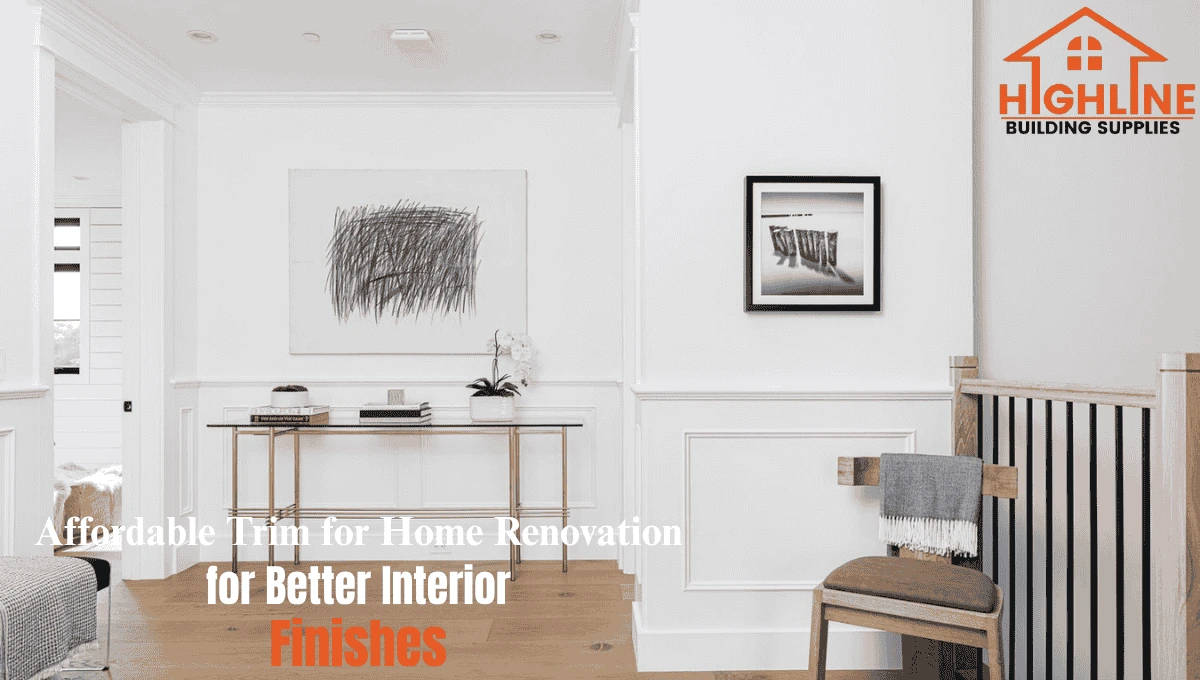
A well-finished room rarely comes down to paint color alone. In many homes, the real difference between a basic space and a polished one is the trim. Choosing affordable trim for home renovation can help you create cleaner lines, better transitions, and a more complete interior without stretching your budget. Whether you are updating one room or finishing a full remodel, the right trim can make walls, ceilings, doors, and flooring feel intentional instead of unfinished.
Many homeowners focus on flooring, cabinetry, or wall color first, then treat trim like an afterthought. That usually leads to mismatched details, rushed purchases, or styles that do not fit the rest of the home. This guide explains what trim actually does, which styles work best, where budget matters most, and how to choose options that look better and last longer.
What Trim Does in a Renovation
Trim is not just decorative. It serves both visual and practical purposes throughout a home.
Common functions of interior trim:
- Covers gaps between surfaces
- Creates clean transitions between walls, floors, ceilings, and openings
- Protects wall edges and lower wall areas
- Adds proportion and architectural detail
- Helps rooms feel complete and intentional
In practical terms, trim can make a builder-basic room look more refined without requiring a full structural change. That is why it often delivers a strong visual return for the money.
Why Trim Matters More Than Most Homeowners Expect
Trim is one of those details people often notice only when it is missing, damaged, or poorly chosen. Good trim quietly improves a room. Bad trim makes even expensive finishes feel incomplete.
In real renovation projects, trim usually affects:
- How “finished” the room feels
- Whether flooring and wall details connect well
- How modern or dated a room looks
- How easy surfaces are to clean and maintain
- Whether corners and edges hold up over time
If you are already planning paint, flooring, doors, or wall updates, trim should be part of the decision early, not at the end.
Home Trim Ideas That Improve Interiors Without Overspending
Not every room needs elaborate molding. In fact, some of the best home trim ideas are simple, clean, and budget-friendly.
Smart trim upgrades that often make the biggest impact:
- Taller baseboards in main living spaces
- Clean door and window casing
- Crown molding in living rooms, dining rooms, or entryways
- Simple wall trim boxes for feature walls
- Flexible trim for curved or uneven areas
- Matching trim profiles across connected spaces
The key is consistency. One well-chosen trim style used properly throughout the home usually looks more expensive than mixing several unrelated designs.
Trim for Interior Walls: What Works Best
When people think of trim, they often think only of baseboards. But trim for interior walls can do much more than finish the floor line.
Popular wall trim applications include:
- Baseboards
- Chair rails
- Picture frame molding
- Wainscoting
- Wall panel trim
- Door and window casing
For budget-conscious renovations, baseboards and clean wall framing details usually give the best value. They are visible, practical, and can upgrade a room quickly without requiring major construction.
Interior Trim Styles: Which One Fits Your Home?
Not every trim profile fits every house. One of the most common renovation mistakes is choosing a trim style based only on what looks nice in a photo.
Here are the most common interior trim styles and where they usually work best:
- Modern Flat Trim
Best for:
- Contemporary homes
- Minimal interiors
- Clean renovation styles
Why it works:
- Simple lines
- Easier to coordinate with modern doors and floors
- Less visually busy
- Traditional Decorative Trim
Best for:
- Older homes
- Formal spaces
- Classic interior designs
Why it works:
- Adds depth and character
- Pairs well with crown molding and detailed casing
- Transitional Trim
Best for:
- Mixed-style renovations
- Homes blending classic and modern elements
Why it works:
- More flexible across rooms
- Safer choice if you want timeless appeal
If you are unsure, transitional or clean-profile trim is often the safest investment.
Modern Home Trim: What Looks Updated Right Now?
The best modern home trim choices are usually simple, proportionate, and consistent.
What tends to work well in updated interiors:
- Slightly taller baseboards
- Clean crown profiles instead of ornate designs
- Smooth primed finishes
- Consistent casing widths
- White or soft neutral painted trim
What often goes wrong:
- Oversized trim in small rooms
- Decorative profiles that clash with modern flooring or cabinetry
- Mixing too many trim shapes in one open layout
Modern trim does not have to be flashy. Most of the time, it just needs to be clean and deliberate.
Best Affordable Trim for Home Renovation: What to Compare
If you are trying to find the best affordable trim for home renovation, price alone should not be your only filter.
Compare trim based on these factors:
- Material
Common options include:
- MDF
- Finger-jointed wood
- Solid wood
- Flexible trim materials
Each has different strengths depending on moisture exposure, durability needs, and budget.
- Profile
A trim’s shape affects how formal, modern, or decorative it looks.
- Height and Width
Baseboards and crown molding need to fit the room’s scale.
- Finish
Primed trim can save prep time and improve consistency.
- Installation Practicality
Some trim looks great in theory but becomes frustrating around uneven walls or curved surfaces.
This is where product choice matters more than many homeowners expect.
A Practical Trim Molding Buying Guide
A strong trim molding buying guide starts with understanding where the trim is going and what job it needs to do.
Ask these questions before buying:
- Is this for walls, ceilings, floors, or openings?
- Does the room have curved walls or unusual transitions?
- Is the space formal, casual, or modern?
- Will the trim be painted?
- Is durability more important than decorative detail?
What usually works best:
- Simple baseboards for everyday spaces
- Crown molding where ceiling transitions need visual polish
- Flexible trim where standard rigid pieces would create gaps or awkward joints
If you want to buy trim online, it helps to compare profile dimensions and intended use before making a final choice.
For homeowners looking to explore practical options, Highline Supplies offers a useful selection if you want to buy trim online for different room styles and renovation needs.
Best Trim Styles for Living Room Renovation
The living room is one of the best places to invest in trim because it is a high-visibility space.
Strong trim styles for living room renovation include:
- Taller baseboards for visual grounding
- Crown molding for ceiling definition
- Clean wall trim boxes for feature walls
- Coordinated window and door casing
- Smooth, paint-ready trim finishes
A simple rule:
If the room is open-concept, your trim should coordinate with nearby spaces. A dramatic living room trim style that stops abruptly at the hallway usually feels disconnected.
Practical Trim Choices for Home Upgrades
Some trim products are simply easier to live with and easier to install.
Good practical trim choices for home upgrades often include:
- Primed trim that reduces prep work
- Flexible trim for curved or irregular walls
- Durable profiles for high-traffic areas
- Trim sizes proportionate to ceiling height
- Products that match flooring and door styles cleanly
For example, flexible baseboard can be especially useful in older homes where walls are not perfectly straight.
If your renovation includes curves or challenging transitions, products like 1X4×10 STRAIGHT FLEXIBLE TRIM BASEBOARD or 1X6x10 STRAIGHT FLEXIBLE TRIM BASEBOARD can solve installation issues that standard rigid trim often struggles with.
And if you want a more finished ceiling line in formal or main living areas, CROWN 4-1/4 X 9/16 FJ 16’PRIMED 16′ 8012FJP is the kind of detail that can make a room feel much more complete without requiring a major design overhaul.
Benefits of Using Affordable Trim in Renovation
Done correctly, affordable trim can be one of the most cost-effective finish upgrades in a home.
Main benefits:
- Improves visual quality without major construction
- Makes rooms look more complete
- Helps tie walls, floors, and ceilings together
- Can increase perceived home value
- Often works well alongside paint and flooring updates
Trim also pairs naturally with other finish upgrades. If you are planning floors too, this guide on smart flooring solutions for homes can help you think through how your floor and trim choices should work together.
Limitations to Keep in Mind
Trim is useful, but it is not magic.
Realistic limitations:
- It will not fix poor drywall work on its own
- Cheap-looking profiles can still look cheap after paint
- Bad installation ruins even good materials
- Overusing trim can make smaller rooms feel busy
- Not every home benefits from heavy decorative molding
That is why smart selection matters more than simply buying more.
Common Mistakes to Avoid
This is where many renovation projects lose polish.
1. Choosing trim last
Trim should be part of the design plan, not an afterthought.
2. Ignoring scale
Tiny trim in a room with high ceilings often looks unfinished.
3. Mixing too many profiles
This is one of the fastest ways to make a renovation feel inconsistent.
4. Buying based only on price
The cheapest option is not always the best value once prep, fit, and durability are considered.
5. Skipping room-to-room continuity
Your trim should help connect the home, not make every space feel unrelated.
6. Forgetting installation realities
Uneven walls, curves, corners, and transitions matter more than product photos.
Expert Tips That Actually Work
These are the kinds of details that tend to make a visible difference in real projects:
Best practices:
- Keep trim profiles consistent across connected spaces
- Use taller baseboards in primary living areas if ceiling height allows
- Choose paint-ready trim to simplify finishing
- Match trim style to flooring and door design, not just wall color
- Use flexible trim where rigid pieces will fight the wall
- Sample trim in the actual room before buying in bulk
One of the most useful things you can do is view trim as part of the room’s architecture, not just decoration.
Real-World Examples
Example 1: Budget Living Room Refresh
A homeowner repaints the walls, updates lighting, and installs taller baseboards with simple crown molding. The room looks significantly more finished without changing layout or furniture.
Example 2: Older Home Hallway Upgrade
An older hallway with uneven walls uses flexible trim instead of standard pieces, creating cleaner edges and reducing visible gaps.
Example 3: Open-Concept Main Floor
Using one consistent trim style across the kitchen, dining, and living areas helps the entire floor feel more cohesive and professionally finished.
These are the kinds of upgrades that tend to look subtle at first but noticeably improve the whole home.
People Also Ask
1) What is the best affordable trim for home renovation?
The best option depends on the room, style, and wall condition. In many homes, simple primed baseboards and clean crown profiles offer the best value.
2) Is trim worth adding during a renovation?
Yes, especially if walls, flooring, or paint are already being updated. Trim often improves the finished look more than people expect.
3) What trim style works best in modern homes?
Clean, simple trim with minimal detail usually works best in modern interiors. Flat or transitional profiles are often the safest choice.
4) Can trim make a room look more expensive?
Yes. Well-scaled trim can make a room feel more polished and intentional, especially when paired with good paint and flooring choices.
5) Should trim match throughout the whole house?
It does not need to be identical everywhere, but connected spaces should feel coordinated for the best overall result.
What Homeowners Say
We updated our baseboards and crown molding before repainting, and the room looked more finished immediately.
Flexible trim helped us deal with older, uneven walls without obvious gaps.
We were surprised how much cleaner the whole renovation looked once the trim matched from room to room.
Final Thoughts
Affordable trim is one of the smartest finish upgrades in a renovation when it is chosen with purpose. It helps define the room, improves transitions, and adds polish that people often notice without knowing exactly why the space feels better.
The best results usually come from keeping things simple, consistent, and practical. Instead of chasing the most decorative option, focus on trim that fits your home’s scale, style, and layout. That approach usually looks better, installs more cleanly, and holds up longer.
If your goal is better interior finishes without overspending, trim deserves a much earlier place in your renovation plan.
Author Bio
Highline Supplies Editorial Team writes practical, renovation-focused content for homeowners, builders, and buyers who want clearer product guidance and smarter finish decisions. Our content is shaped by real-world remodeling needs, material selection considerations, and the details that help interiors look complete and well planned.

Leave a comment