
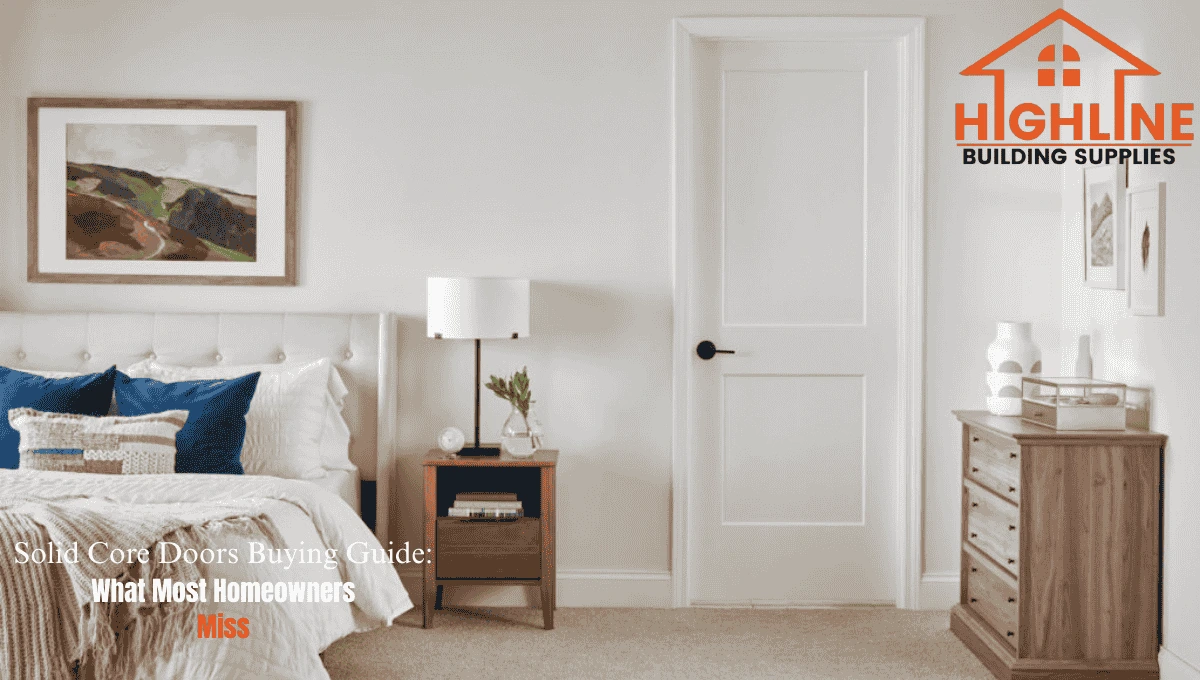
Choosing interior doors doesn’t usually feel like a high-stakes decision—until you live with the wrong ones. In many homes, doors are picked late in the process, often based on price or appearance alone. That’s where most people go wrong.
Solid core doors sit in a middle ground between budget hollow options and expensive solid wood doors, and they’re frequently misunderstood. Homeowners assume they’re “basically the same” as hollow doors, or they overpay for features they don’t actually need. This guide is meant to fix that.
Drawing from real-world experience in home improvement and building materials, this article breaks down what solid core doors really are, when they make sense, where they don’t, and the common mistakes homeowners regret after installation.
What Are Solid Core Doors (and What They’re Not)
A solid core door is an interior doors built with a dense engineered core—typically particleboard, MDF, or a composite material—wrapped in a wood veneer or molded surface.
They are not:
- Fully solid wood doors
- Exterior-rated doors
- Purely decorative upgrades
They are:
- Heavier and denser than a hollow core door
- Designed to improve sound control and durability
- A practical upgrade for everyday living spaces
Solid Core vs Hollow Core: The Core Difference
The confusion usually starts here.
| Feature | Solid Core Doors | Hollow Core Door |
| Weight | Heavy | Very light |
| Sound control | Moderate to good | Minimal |
| Durability | High | Low |
| Feel when closing | Substantial | Thin, echoing |
| Cost | Mid-range | Budget |
A hollow core door is essentially a shell with a cardboard or honeycomb interior. It works fine for closets or low-traffic rooms. But once installed in bedrooms, offices, or bathrooms, their weaknesses become obvious—especially with noise.
Why Solid Core Interior Doors Matter More Than You Think
Homeowners often focus on finishes, flooring, and fixtures while underestimating doors. In reality, interior doors affect daily comfort more than most people expect.
Practical Benefits That Show Up Every Day
- Better Sound Control
Solid core interior doors noticeably reduce noise transfer. This matters in:
- Home offices
- Bedrooms near living areas
- Nurseries
- Media rooms
They won’t soundproof a room, but they dramatically cut down voices, TVs, and everyday household noise.
- Durability That Holds Up
Solid core doors resist:
- Warping
- Dents from kids or pets
- Hardware loosening over time
In busy homes, this translates to fewer repairs and longer replacement cycles.
- A More Substantial Feel
This is subjective, but important. Solid core doors close with weight. They don’t rattle, flex, or feel disposable—something many homeowners only realize after upgrading.
Door Styles Homeowners Commonly Overlook
Once people decide on solid core, they often rush the style decision. That’s where design regrets happen.
Shaker Styles Explained (Without the Hype)
Shaker doors are popular because they balance clean lines with versatility. The panel count changes the look more than most people expect.
- Minimalist, modern
- Works well in contemporary homes
- Shows wall imperfections more clearly
- Transitional option
- Works in modern and traditional spaces
- Common in renovations blending old and new
- More traditional appearance
- Better suited for classic or craftsman interiors
- Visually busier but forgiving in older homes
Many homeowners choose purely based on photos, without considering ceiling height, trim width, or wall texture. That mismatch often feels “off” after installation.
Where Solid Core Doors Make the Most Sense
Not every room needs an upgrade. Strategic placement matters.
Rooms That Benefit Most
- Bedrooms
- Bathrooms
- Home offices
- Guest rooms
- Shared walls between noisy spaces
Rooms Where Hollow Core Is Usually Fine
- Closets
- Pantries
- Laundry rooms (in some layouts)
A common mistake is installing solid core doors everywhere “just in case.” That adds cost without adding value.
The Weight Problem No One Warns You About
Here’s a hands-on issue that comes up often: solid core doors are heavy.
That affects:
- Hinges (cheap hinges will sag)
- Door frames (must be square and secure)
- Installation labor
Homeowners sometimes reuse old hardware or frames designed for hollow doors. The result is sticking doors, uneven gaps, and long-term wear.
Expert tip:
If your home has older framing, budget for hinge upgrades and frame inspection. This prevents problems that show up months later.
Sound Control: What Solid Core Doors Can and Can’t Do
There’s a myth that solid core doors “block sound.” They don’t—at least not fully.
What they do:
- Reduce airborne noise
- Limit sound vibration through the door panel
What they don’t:
- Seal gaps at the bottom or frame
- Replace acoustic insulation
- Eliminate sound completely
For real results, pair solid core doors with:
- Proper weatherstripping (even for interiors)
- Tight door-to-frame tolerances
- Rugs or soft furnishings inside rooms
Common Buying Mistakes Homeowners Regret
After years of feedback from builders and homeowners, these mistakes come up repeatedly.
- Choosing Style Before Function
A door that looks great but doesn’t control sound or fit the space will always disappoint.
- Ignoring Door Thickness
Standard thickness works for most homes, but some renovations require adjustments. Skipping this check causes trim and hardware issues later.
- Mixing Door Types Randomly
Combining hollow and solid core doors in adjacent rooms often feels inconsistent—especially in hallways.
- Overlooking Long-Term Use
What works for a guest room might not work for a child’s bedroom or home office.
Solid Core Doors and the Bigger Picture of Building Materials
Doors don’t exist in isolation. They interact with framing, trim, flooring, and wall construction. That’s why experienced suppliers stress planning ahead.
If you’re renovating or building, it’s worth understanding how doors fit into the broader category of building materials that affect performance and comfort. Some choices are easy to change later—doors are not.
(For a broader perspective, see this related guide on building materials that homeowners frequently underestimate.)
Real-World Use Cases from Actual Homes
Case 1: Home Office Upgrade
A homeowner replaced a hollow core door with a solid core interior door in a shared hallway office. Result:
- Fewer interruptions during calls
- Less sound leakage from TV noise
- No change needed to wall construction
Case 2: Bedroom Privacy in a Family Home
Parents upgraded bedroom doors after realizing nightly noise traveled easily. Solid core doors reduced sound enough to improve sleep without full renovation.
Case 3: Renovation on a Budget
Rather than upgrading every door, solid core doors were installed only in bedrooms and bathrooms. Closets remained hollow core—saving money with no downside.
FAQs:
Are solid core doors worth the extra cost?
For bedrooms, offices, and bathrooms—yes. For closets and low-use spaces, usually not.
Do solid core doors increase home value?
They don’t add resale value directly, but they improve daily living quality, which buyers often notice.
Can I replace a hollow core door with a solid core door?
Usually yes, but hinges and frames may need reinforcement.
Are solid core doors better for soundproofing?
They reduce noise but don’t fully soundproof. Sealing gaps matters just as much.
Are solid core doors hard to install?
They require more care due to weight, but a professional installer won’t find them difficult.
What Homeowners Say (Real Experiences)
We didn’t realize how loud our house was until we upgraded just two doors. Huge difference.
— Mark L., homeowner
I wish someone had told us about hinge upgrades earlier. Once that was fixed, the doors were perfect.
— Sandra K., renovation client
Solid core doors made our home office usable without remodeling the whole room.
— Daniel R., remote worker
Final Thoughts: What Most Homeowners Miss
Solid core doors aren’t about luxury—they’re about function, comfort, and longevity. The mistake most homeowners make isn’t choosing the wrong brand or style. It’s misunderstanding where these doors matter and what they actually do.
When chosen intentionally, solid core interior doors solve real problems:
- Noise
- Wear and tear
- Day-to-day comfort
That’s why experienced suppliers like the team behind Highline Supplies emphasize education first. The right door choice rarely feels dramatic—but it quietly improves how a home works every single day.
About the Author / Editorial Team
This article was written by contributors with hands-on experience in home improvement and building materials, drawing from real renovation projects, supplier insights, and homeowner feedback. The focus is always on practical guidance what works, what doesn’t and what people wish they knew before making long-term decisions.


Leave a comment